
Licence and identity
Legal identity, responsible parties, RBQ licence and work classes when required, insurance and alignment with advertised services.
RBQ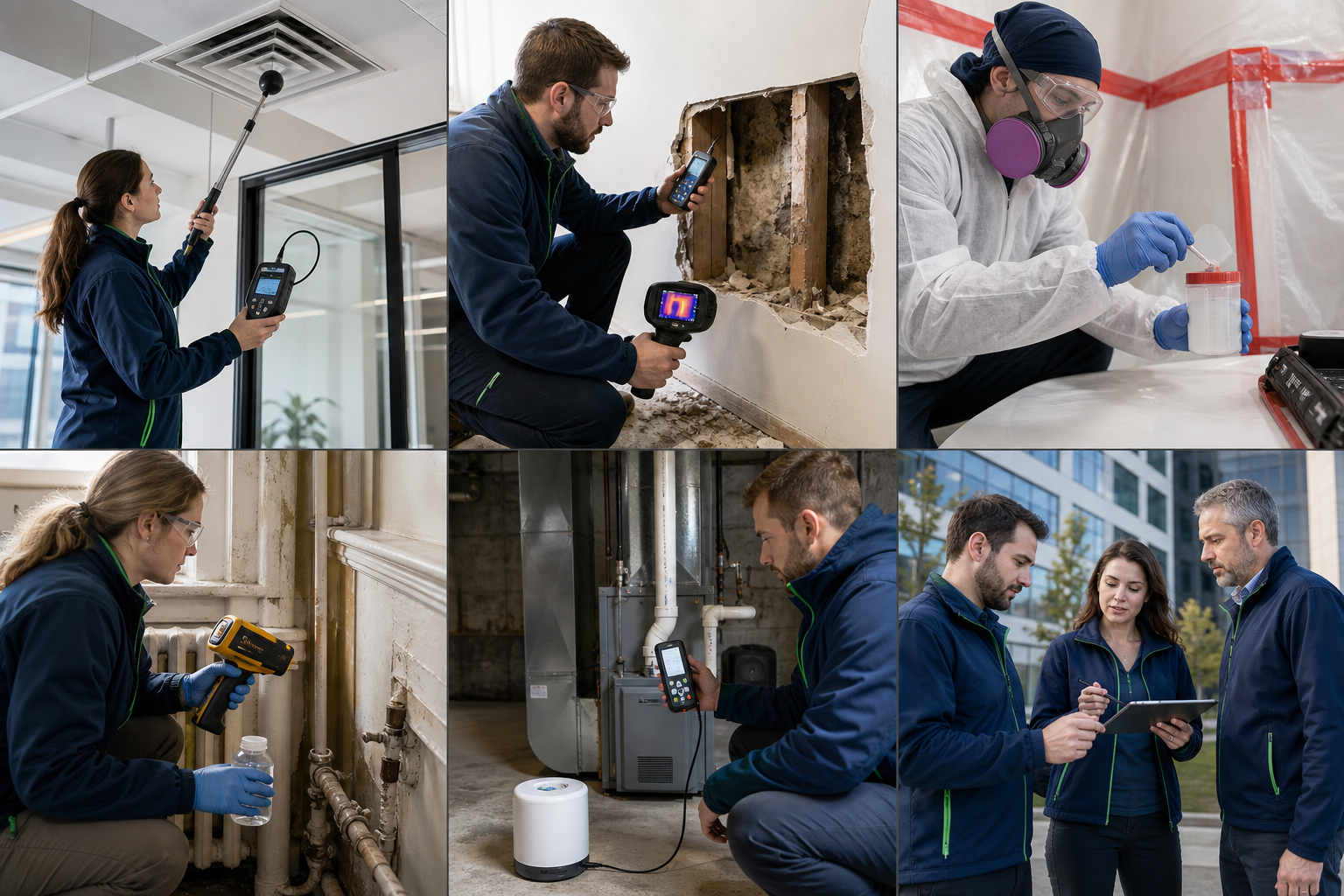
Clear status from the start
Status is issued by RSBQ for one defined scope and validity period. It is not a government licence, Standards Council of Canada accreditation, or BNQ, IICRC, Health Canada, CNESST, RBQ, IRSST or ASHRAE certification or affiliation. Applicable laws, regulations and competent authorities always prevail.
Understand the legal statusWhat private accreditation confirms
For the scope displayed in the registry, the company must supply evidence and pass the applicable RSBQ controls. The review covers methods, people, instruments, documents and results — not merely a declaration.
Legal identity, responsible parties, RBQ licence and work classes when required, insurance and alignment with advertised services.
RBQApplicable CNESST requirements: asbestos identification and registry, training, containment, dust control, respiratory protection and evidence records.
CNESSTDefined mandate, investigation strategy, calibrated instruments, justified sampling, chain of custody, competent laboratory and interpretation limits.
HEALTH CANADA · IRSSTMoisture source, extent, remediation plan, occupant protection, controlled removal and post-work verification.
BNQ · IICRC · NYC DOHMHWater category, drying, containment, cleaning, material removal, parameter tracking and completion file.
IICRC S500 · S520 · S590Outdoor air, occupancy, sources, filtration, pressure, maintenance and operation verified for the building type.
ASHRAE 62.1 · 62.2Scope-appropriate insurance, controlled subcontractors, handled complaints, declared changes and renewal subject to another review.
RSBQThese organizations publish laws, guidance or standards used as references. Citation does not mean approval, partnership or affiliation. Private accreditation is issued only by RSBQ for the displayed scope.
View official sourcesBefore buying a property
The RSBQ Portrait is designed as a specialized complement to a pre-purchase inspection. It organizes the evidence, measurements, analyses and follow-ups needed to understand conditions that may affect future occupants.
Read the complete protocolHumidity, combustion, particles, VOCs and targeted measurements based on sources.
Past losses, odours, material moisture and plausible concealed contamination.
Presumed or analytical inventory based on age, materials and planned work.
Paint, dust, soil and water based on building age and vulnerable occupants.
Supply, plumbing, treatment, microbiology and relevant chemistry, especially for wells.
Long-term testing at the lowest occupied level; result remains pending when needed.
Appliances, garage, venting, CO alarms and transfer pathways.
Sewage, pests, pesticides, tanks, soil, silica or unusual uses.
RSBQ does not replace the pre-purchase inspection, laboratory analyses or required specialists. It organizes them within one decision architecture.
RSBQ · Multi-building edition
The common core now contains 28 clauses. Nine cumulative annexes adapt controls to occupants, processes, shared systems and operating duties.
View the complete matrixHVAC, complaints, tenants, due diligence and layout changes.
View annexMRepresentative units, common areas, garages and transfers.
View annexEClassrooms, childcare, public buildings and variable occupancy.
View annexSVulnerability, water, pressure, construction and clinical continuity.
View annexHGuestrooms, kitchens, laundry, water systems and pools.
View annexIProcesses, local exhaust, exposure and migration.
View annexChoose the right pathway
RSBQ organizes the pathway around the question to be resolved. Scope, competence, measurement and evidence needs differ for a purchase, occupant complaint, loss event or accreditation application.
Complement the pre-purchase inspection with a targeted portrait of air, moisture, mould, asbestos, lead, water, radon and combustion.
View the pre-purchase pathway→02Structure a complaint, water loss, ventilation problem, contamination event or re-occupancy decision with clear responsibilities and deliverables.
Explore building health→03Check eligibility, prepare evidence, define scope and understand audit, decision, monitoring and possible withdrawal.
Prepare an application→Investigation architecture
An assessment is not a collection of numbers. A measurement must answer a question, use an appropriate method and lead to an understandable action.
Define the building, areas, occupants, building symptoms, planned work, exclusions and the decision required.
Review the enclosure, moisture, ventilation, materials, processes, history, complaints and previous work.
Sample only when the result can clarify the problem, answer a requirement or verify that correction worked.
Record the instrument, calibration, method, location, time, conditions, chain of custody and laboratory.
Use the correct reference, distinguish public health from occupational exposure, explain limitations and avoid absolute conclusions.
Address the source, ventilation, filtration, containment or materials, then close the issue with suitable evidence.
Auditable file
The final report should let another competent person understand what was assessed, how, by whom, with what limitations and against which decision rule.
Question, areas, included services, exclusions and responsibilities.
Use, age, occupancy, systems, renovations and relevant events.
Responsible people, training, licences and applicable subcontractors.
Protocols, instruments, calibration and measurement conditions.
Identifiers, locations, chain of custody and competent laboratory.
Observations, photographs, plans, data and access limitations.
References, criteria, results, findings and confidence level.
Corrections, verification, remaining restrictions and follow-up schedule.
RSBQ · Public service
Consumers, owners, property managers and service requesters are never charged to use RSBQ.
Submit my request for freeSubject to accredited-company availability, region, requested service and urgency. In immediate danger, contact emergency services.
RSBQ · Neutrality
RSBQ does not favour or recommend any particular company. Requests are routed by category, specialty, service area, availability, urgency, capacity, active status and fair rotation.
RSBQ · Verification
Accredited companies display their RSBQ number on their website, estimates and invoices. Confirm identity, status, validity and the categories actually covered.
Private registry · exact lookup
To protect holders and prevent registry browsing, no company name is displayed publicly. Enter a complete RSBQ number or an RBQ licence number already linked to an authorized record.
Open detailed verificationQuébec Building Health Network
RSBQ gives serious professionals a common requirement, a verifiable scope and public evidence of their commitment. Assessment, decision and publication remain separate and documented.
Understandable requirements, a defined scope and identifiable references.
Documents, observations and results linked to every assessed requirement.
The final decision is separate from the audit and applicant support.
Renewals, suspensions and revocations are reflected in the public registry.
Certificate · badge · status
Every RSBQ credential must display a unique number, scope, decision, validity period and verifiable status. The visual never replaces the registry.
PRIVATE ACCREDITATION CERTIFICATE
Voluntary status issued only by RSBQ. Scope, limitations and closed controls are recorded in the verifiable file.
Valid, published scope
Validity period has ended
Use of status is interrupted
Decision or monitoring underway
Eligibility not yet decided
Scope limited to closed controls
Areas of expertise
Every guide explains triggers, expected evidence, limits and applicable official references.
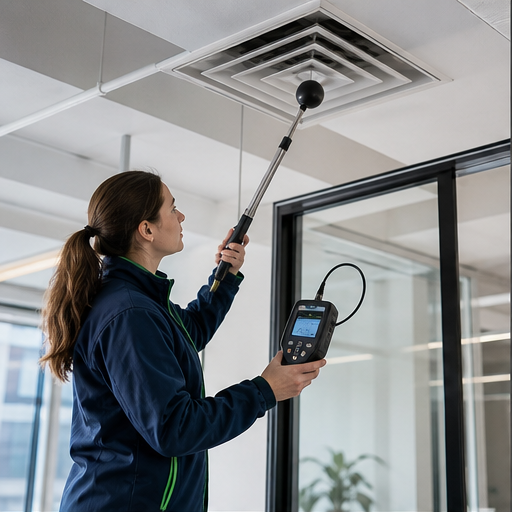
Ventilation, humidity, particles and investigation practices.
Read the guide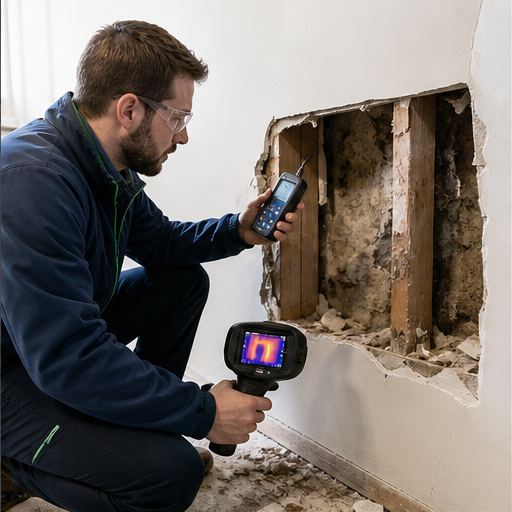
Moisture causes, assessment, remediation and prevention.
Read the guide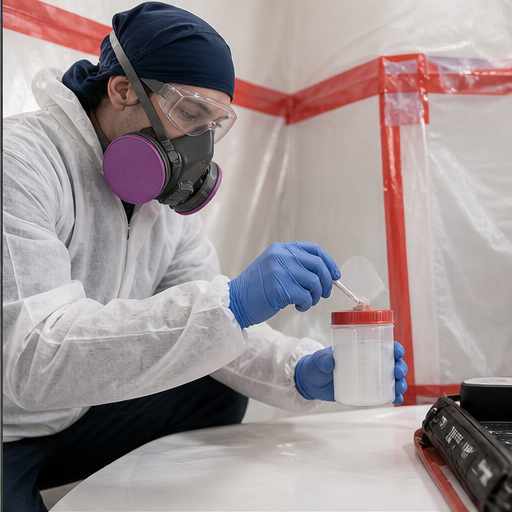
Identification, responsibilities, dust control and traceability.
Read the guide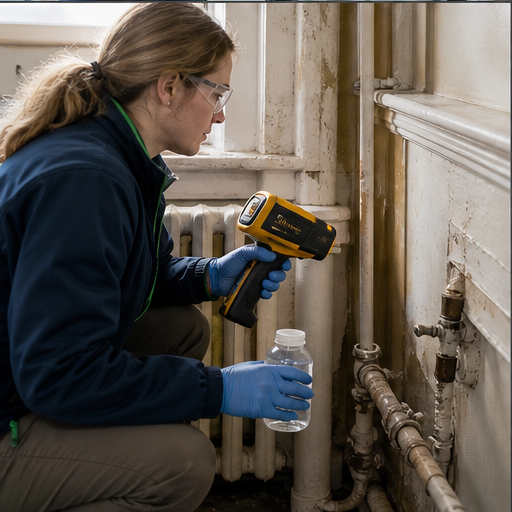
Paint, dust, water and renovation-related exposure.
Read the guide
Wells, plumbing, microbiology, chemistry and accredited laboratories.
Read the guide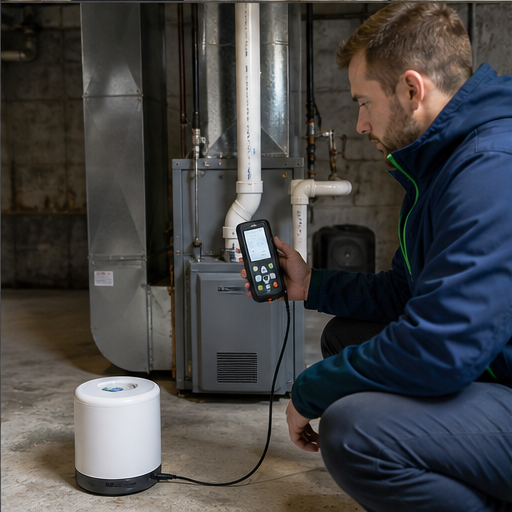
Long-term measurement, interpretation and corrective-action follow-up.
Read the guide
A building-health portrait that complements the standard inspection.
Read the guide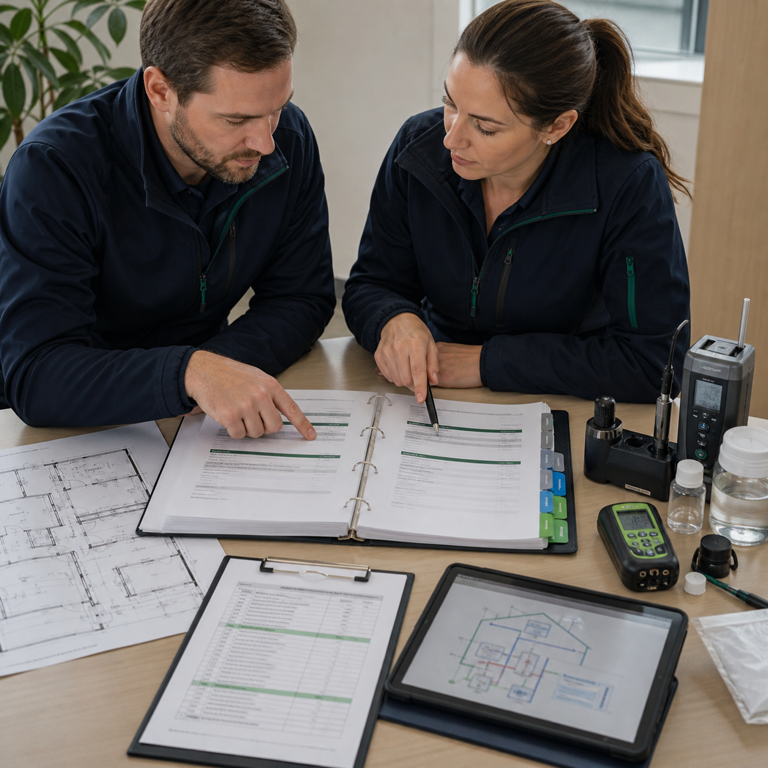
Twenty-eight clauses, nine annexes and minimum evidence.
Read the guideCertification journey
Identity, scope and commitments
Documents and gap analysis
Interviews, fieldwork and evidence
Treatment and closure of findings
Independent file review
Registry, changes and renewal
Conformity matrix
Health Canada, CNESST, RBQ, BNQ, IICRC, IRSST, ASHRAE, ISO, INSPQ and laboratory accreditation programs feed a versioned matrix by building, contaminant and type of work.
Frequently asked questions
A company that has legally operated for at least two complete years may apply. It must then demonstrate its identity, applicable licences, insurance, competence, methods, professional reputation and ability to retain evidence.
Yes. An insufficient professional record, repeated credible complaints, sanctions, inaccurate declarations, unverifiable references or unclosed major findings may result in ineligibility or refusal after a fair review of the facts.
Yes. RSBQ may investigate, require corrective action, suspend or withdraw status when a company no longer meets its scope, loses required licence or insurance, endangers people, refuses surveillance or misuses the badge.
Yes. The multi-building edition contains a 28-clause common core and annexes for commercial, multi-unit, education, care, hospitality, industrial, public and transaction or construction scopes.
A general pre-purchase inspection is primarily visual. The RSBQ Portrait adds a specialized review of indoor air, moisture, mould, asbestos, lead, water, radon and combustion sources, with targeted analyses when justified.
Not necessarily. Health Canada recommends a long-term test lasting at least 91 days, preferably during the heating season. That module therefore remains provisional until a valid result is received.
The company demonstrated, for the displayed scope, that it applies relevant regulatory requirements, holds required licences and insurance, and follows the technical protocols selected by RSBQ. Its unique number verifies status, scope and validity period.
Every control identifies the source, edition, applicability, method and expected evidence. Laws and regulations take priority; proprietary standards are used from a lawfully obtained edition.
It confirms that a defined scope satisfies the versioned RSBQ matrix and that required findings were closed. Applicable public licences and external certifications remain separately verified with their issuer.
The number or link connected to its QR code leads to the registry. The status, scope and validity period must match the document presented.
The registry uses exact-number lookup to limit indexing, automated collection and browsing of certificate holders. The name and scope are revealed only after the complete number is entered.
The public status is updated and the document must not be presented as active while suspended.
Healthier buildings · documented practices
Explore the RSBQ accreditation framework or open an applicant file in the secure workspace.