
RSBQQuébec Building Health NetworkVerify a company

Radon in buildings

Radon: test long enough to make the right decision

Radon is an invisible, odourless radioactive gas. Its concentration changes over time, so a spot measurement cannot replace a long-term test used to support a mitigation decision.

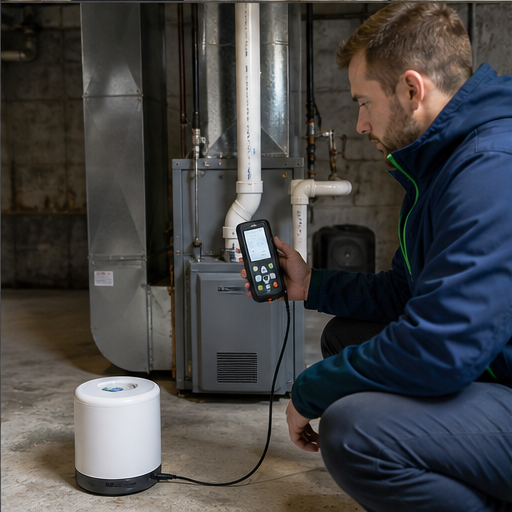
RSBQ professional fieldwork — Radon in buildings

Apply the Canadian guideline

The Government of Canada guideline recommends corrective action when the annual average concentration exceeds 200 Bq/m³ in a building’s normally occupied area.

  • Test at the lowest occupied level
  • Place the detector under the protocol
  • Record unusual conditions
  • Report the actual test duration
  • Take faster action at higher concentrations

Respect the measurement period

Health Canada recommends a long-term test lasting 3 to 12 months, with a minimum of 91 days, ideally during the heating season.

  • The pre-purchase module may remain pending
  • No promise of a reliable one-visit result
  • Protect the device from movement
  • Verifiable start and end dates
  • Laboratory or service appropriate to the method

Mitigate, then confirm

When work is needed, a competent person selects a method suited to the building. A post-mitigation test confirms actual system performance.

  • Building diagnostics
  • Source reduction or depressurization
  • Safe exhaust location
  • Labelling and maintenance instructions
  • New long-term measurement

RSBQ field guide · Radon and combustion

Questions a serious file should answer.

Context determines the method. These guideposts help distinguish a structured investigation from a simple collection of results.

01

Where should measurement occur?

Lowest occupied level, actual use and entry pathways guide placement.

02

For how long?

Duration must represent exposure; short tests do not automatically replace long-term measurement.

03

Is the building operating normally?

Occupancy, heating, ventilation, weather and interventions may influence data.

04

How is the file closed?

Interpretation, competent mitigation, control measurement and system maintenance.

Minimum deliverables
  • Assignment and assessed areas
  • Method and conditions
  • Competence and instruments
  • Results and observations
  • Limitations and uncertainty
  • Decision, correction and follow-up

RSBQ · Québec · Canada

A clear scope. A verifiable status.

Explore the RSBQ accreditation process or verify a published record.

View the process